SDV Enterprise for database modernization
Test migrations, configurations, and infrastructure with a synthetic clone of your database.
Generate a complete, production-realistic database from your own data patterns to compare platforms, plan capacity, and fine-tune NL-to-SQL models—without copying production records into test environments.
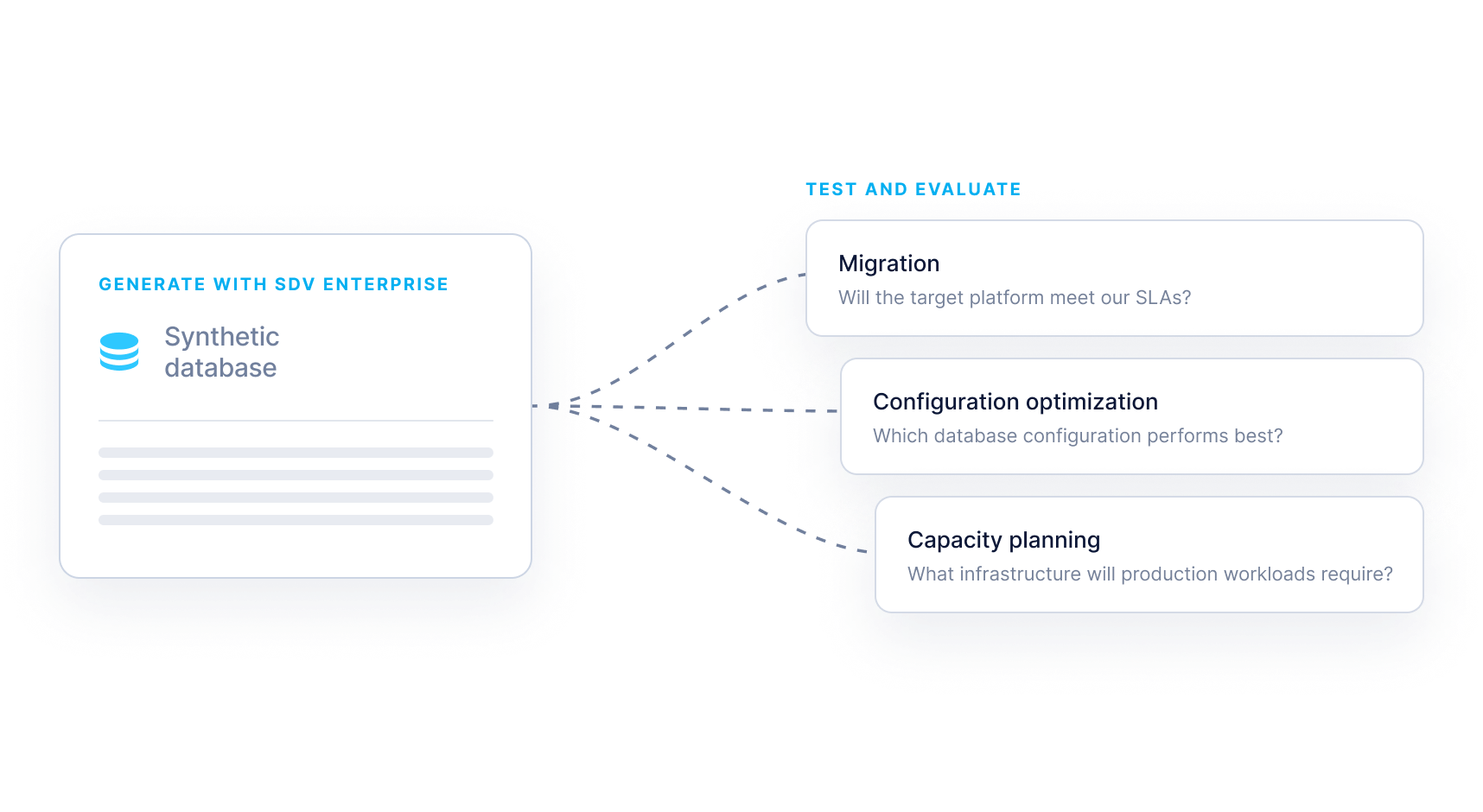
A production-like synthetic database
— generated from your own data patterns.
SDV Enterprise trains a generative relational model from scratch. It learns the database as a connected whole, capturing the statistical patterns, data structure, relationships, context, and business rules embedded in the data and spanning its tables. The trained model can then generate new synthetic databases repeatedly without distributing the original records.
1
Define the experiment
Choose the objective: migration testing, configuration optimization, capacity planning, performance testing, or NL-to-SQL fine-tuning.
2
Train a generative relational model
Use SDV Enterprise to train a model that learns the database as a connected whole.
3
Generate the synthetic database
Generate a complete synthetic version of the database at the scale the experiment requires.
4
Test, compare, or fine-tune
Run repeatable tests or fine-tune NL-to-SQL models using consistent, production-realistic data.
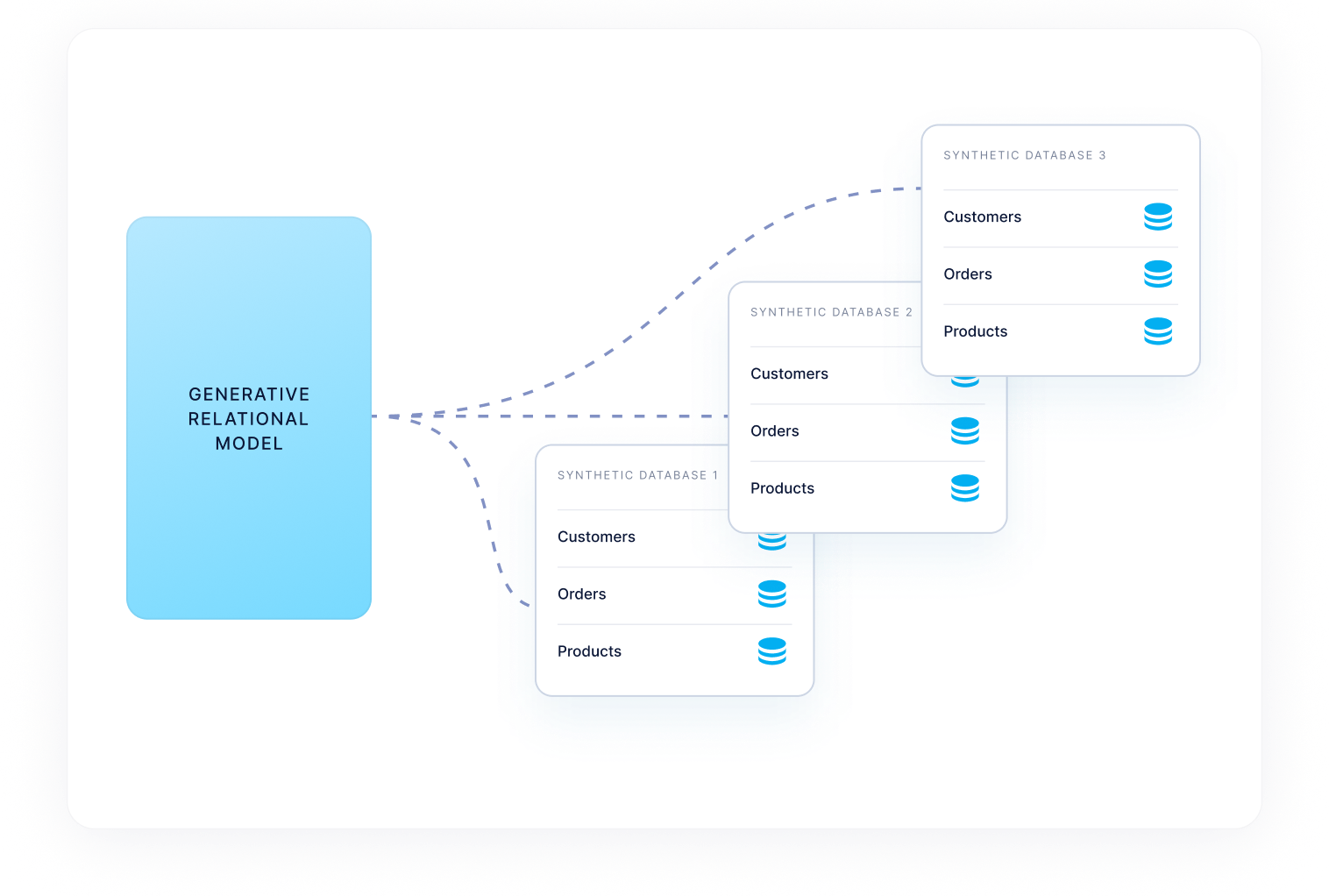
Train once. Generate many
synthetic clones of your
database.
Train a generative relational model on your database as a connected whole. Retain the trained model and use it to generate complete synthetic database clones repeatedly, at the scale and inside the environment required for each test.
Test how the target platform
will behave before cutover.
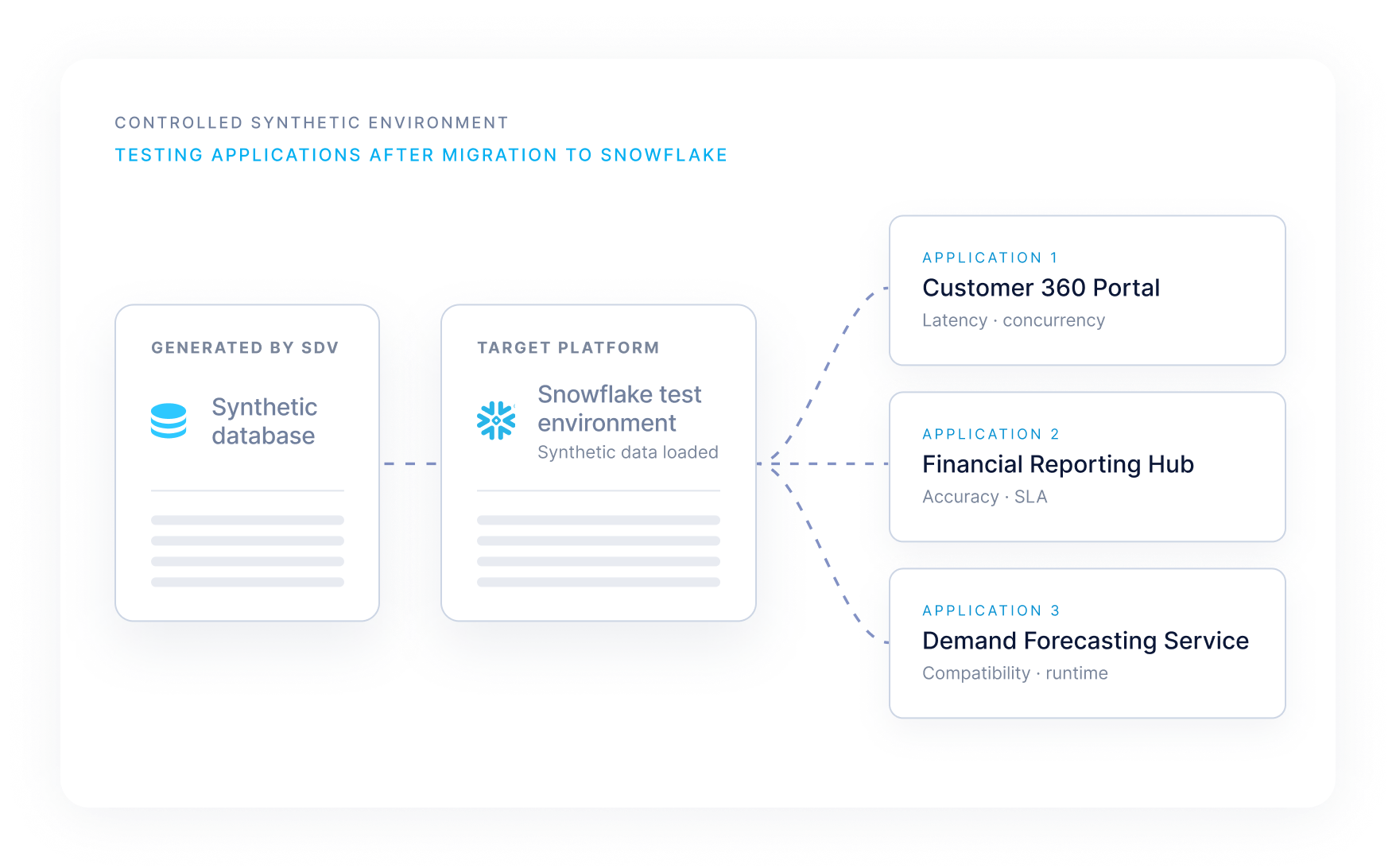
A migration changes the runtime foundation of critical applications. Load a synthetic clone of your database into each candidate platform, run the same representative workloads, and compare query latency, throughput, concurrency, compatibility, execution plans, infrastructure requirements, and service-level performance before production is at risk.
- Benchmark destination platforms using the same synthetic clone and representative workloads
- Validate schema, constraints, and referential integrity after loading
- Estimate infrastructure requirements, operating costs, and migration windows
- Identify regressions while the architecture can still change
Turn configuration tuning
from guesswork into a
repeatable experiment.
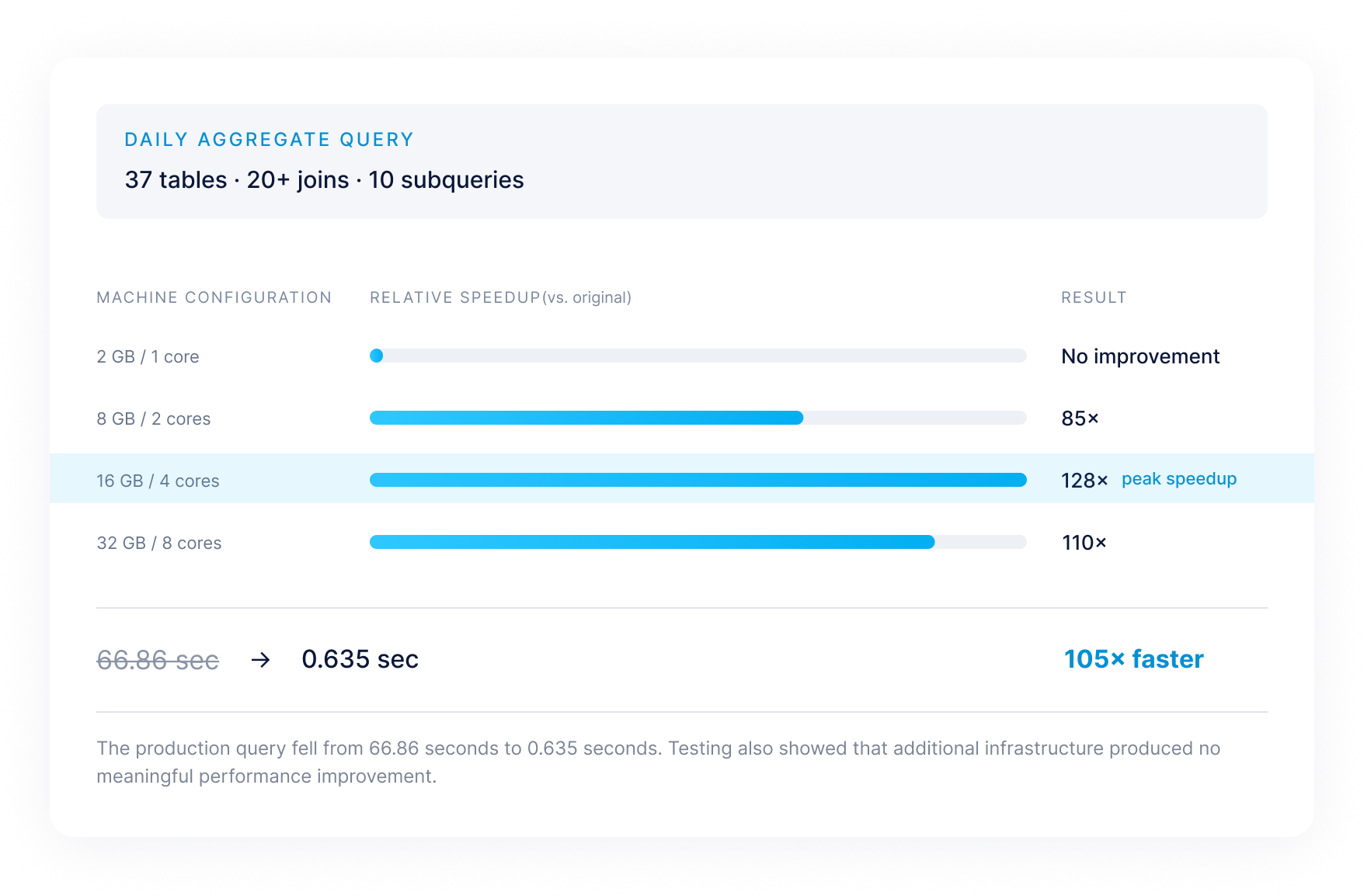
Epiconcept used SDV Enterprise to generate a synthetic clone of its complex 37-table database. The team loaded the synthetic database into MariaDB and ran the same representative queries across different database configurations and machine profiles—without exposing sensitive patient records.
16 GB / 4 cores
Optimal configuration identified
105×
Faster query execution
Reuse a generative relational model across
database decisions.
Retain the trained generative relational model and generation workflow as an internal capability. Generate new synthetic clones as platforms, workloads, and requirements evolve. Retrain the model when material changes to the source database need to be captured.
Platform and vendor evaluation
Compare performance, compatibility, and cost across database engines and cloud platforms using the same synthetic clone and representative workloads.
Database upgrade regression testing
Detect performance and behavioral regressions before upgrading.
Infrastructure sizing and capacity planning
Determine resource requirements at production-scale data volumes using representative workloads.
Index, partition, and sharding experiments
Test physical design strategies using the same synthetic clone before changing production.
High availability and disaster recovery testing
Run representative workloads against a synthetic clone to validate failover and recovery behavior.
NL-to-SQL fine-tuning and evaluation
Fine-tune and evaluate NL-to-SQL models for your schema using synthetic training examples and a synthetic clone of your database.
WHY SYNTHETIC DATABASES
Realism without the operational burden of a production copy.
Benchmark suitability should be validated against the properties each workload depends on, including schema, cardinality, distributions, correlations, and volume.
Production patterns stay
inside your security
boundary.
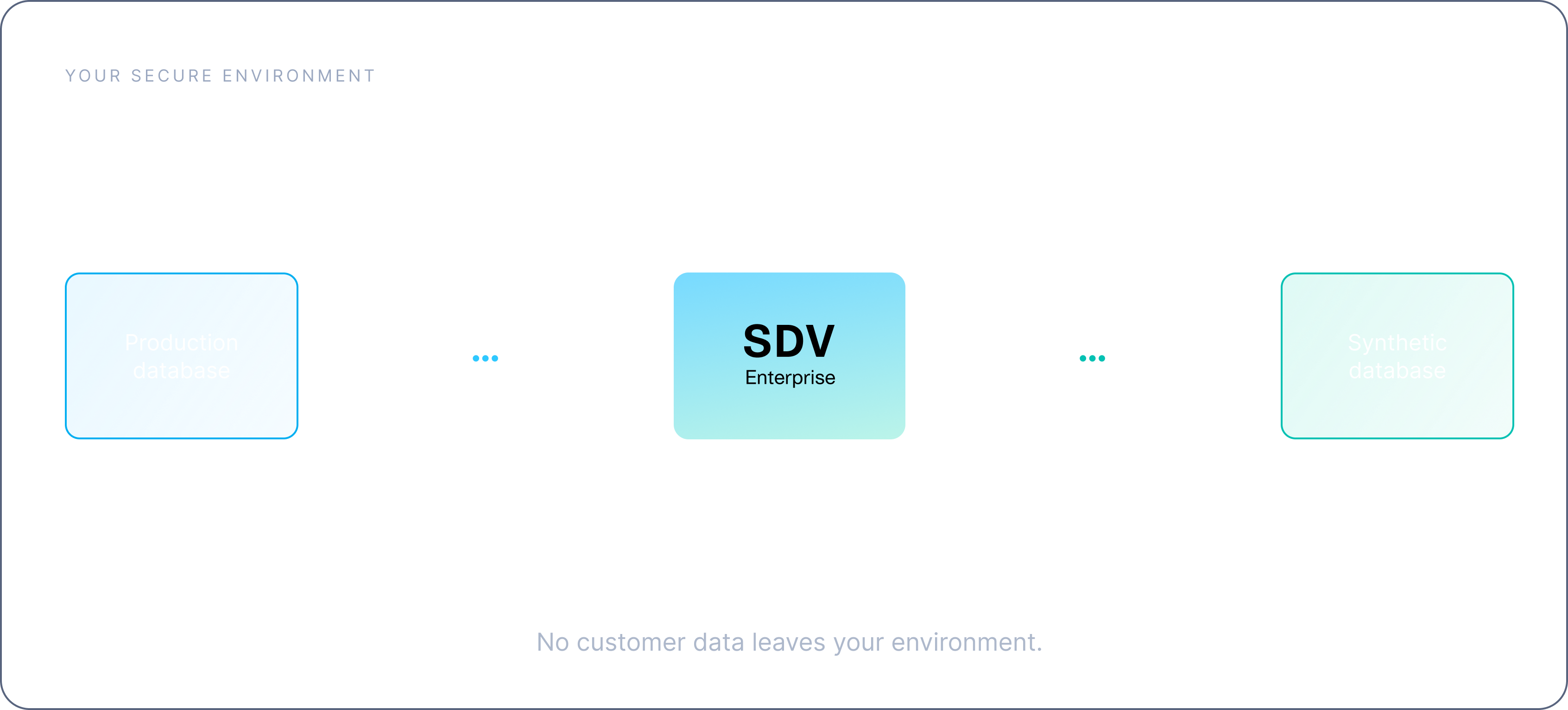
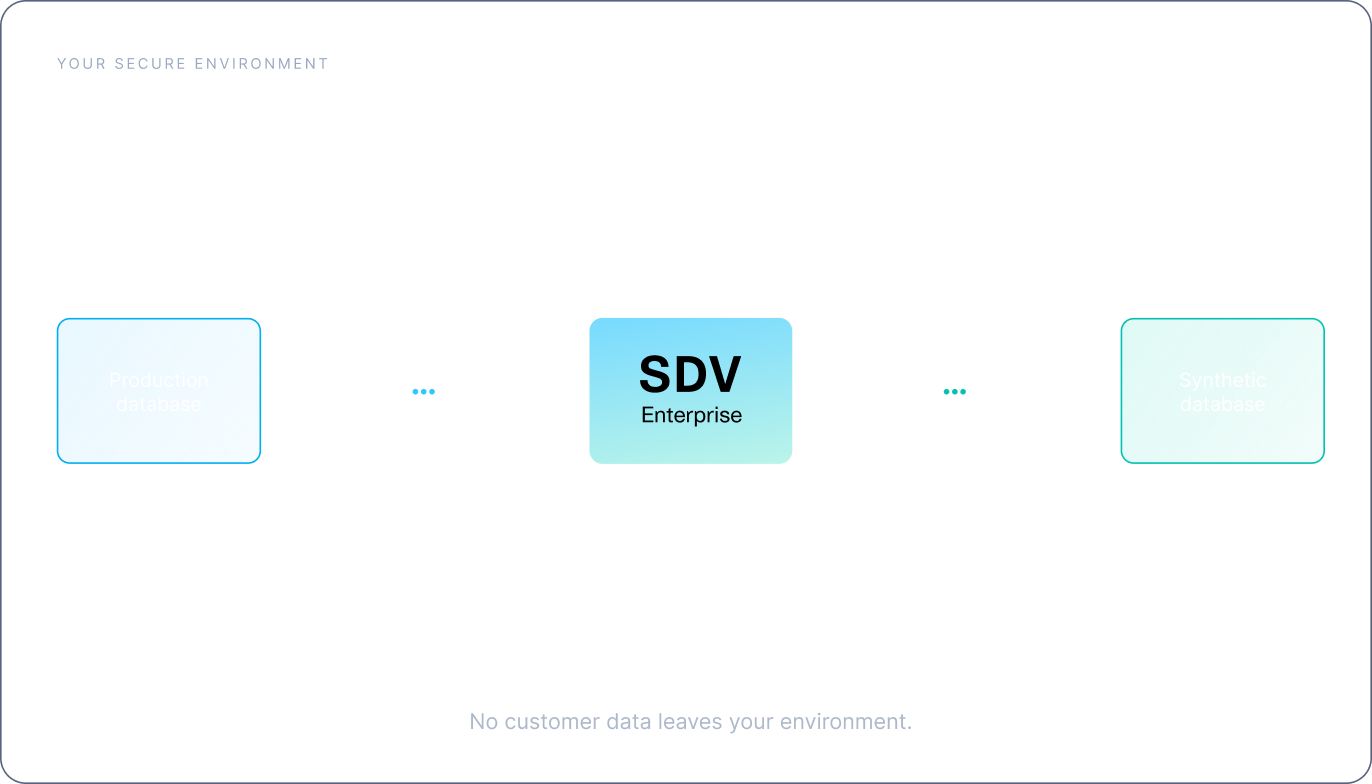
SDV Enterprise is a Python SDK installed where your database already lives. Train the generative model, save it, and generate new databases without sending customer data to DataCebo.
Talk to our team