Blog
Product
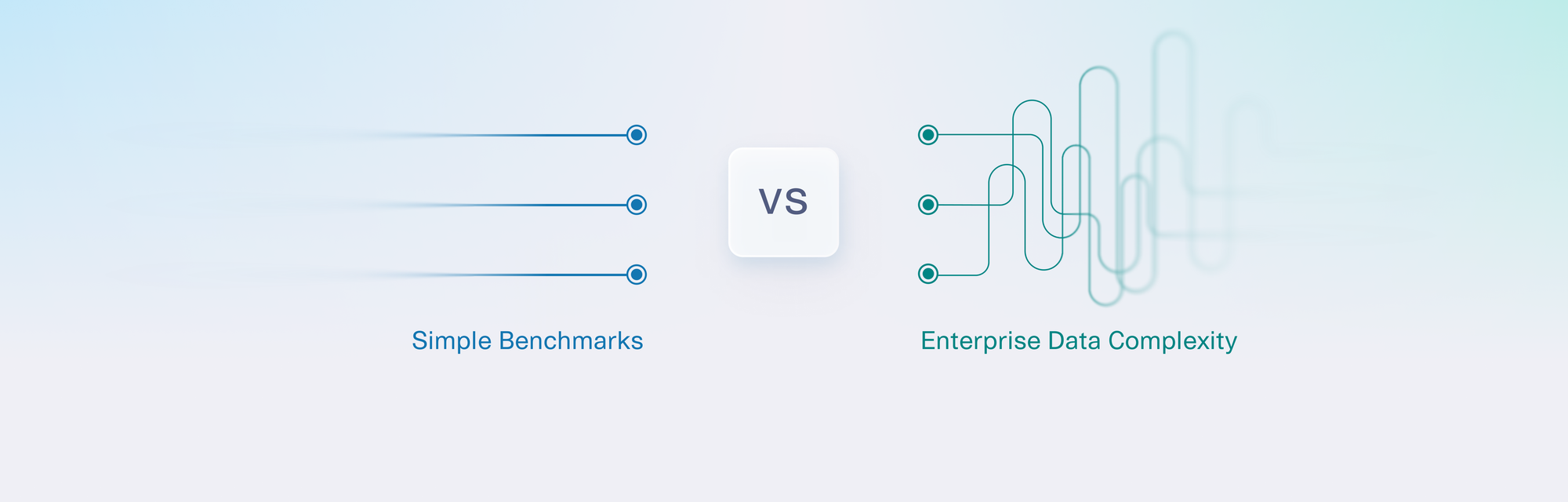
Why are comparisons to SDV Community misleading for enterprise evaluation?
Many vendors compare against SDV Community to signal enterprise readiness—but those comparisons often hide critical gaps. In real enterprise environments, these shortcuts break down. Here’s how to evaluate solutions the right way.

How DataCebo Supports Enterprises: Fast, Safe, and Effective
See how DataCebo enables enterprises to create generative AI models without needing to access their data. With fast debugging, seamless integration, and robust testing, it makes scalable adoption possible.

Differential Privacy for Synthetic Data (Part II): Trust-but-Verify
You can trust that your software is applying differential privacy, but can you verify it for yourself? Use our framework to measure privacy for any synthesizer.

Differential Privacy for Synthetic Data (Part I): Synthesizer Disclosure
Synthesizers are game-changers for data disclosure and differential privacy. Use them to create unlimited, differentially private synthetic data.

Introducing AI Connectors: Database Integration for Synthetic Data
AI Connectors allow users to create robust, referentially sound synthetic data by connecting to an existing database and automatically creating highly accurate metadata, regardless of the underlying database technology.

Synthesizers are data diversification engines – embrace them!
Synthesizers can create diverse data that is also high quality. Check out how these two vital traits inform each other and drive great business outcomes.

Meet the SDV Enterprise Multi-Table Synthesizers
To create multi-table synthetic data, it's important to learn the connections between tables. Explore 3 different approaches to the challenge.

Train an SDV Generative AI: A random subsample is all you need
It is said that Generative AI requires large amounts of data for training. We've tested the SDV and found that a smaller subsample is all you need.

Contextual Anonymization: The latest innovation for PII
Can you anonymize PII without sacrificing usability? Explore the latest techniques in anonymization.
Join the DataCebo Forum
Discuss SDV features, ask questions, and receive help.
Visit the DataCebo ForumExplore our blog
Read our newest insights about synthetic data, updates on our products, and successful use cases.
Read our blog